Opinion by Randall Arauz, International Marine Conservation Policy Director, Marine Watch International, Published in Costa Rica’s Newspaper La Nacion, June 6, 2025, Pg 26
“The Country’s Achilles’ Heel at the Ocean Conference”
The Third United Nations Ocean Conference (UNOC3), to be held soon in Nice, France (June 9–13), aims to accelerate action for the conservation and sustainable use of the oceans. Costa Rica has the honor of co-chairing the event with France, bolstered by its global reputation as a leader in conservation and sustainable use of nature—including marine resources. But can Costa Rica credibly lead these global marine conservation processes if it fails to protect hammerhead sharks at home?
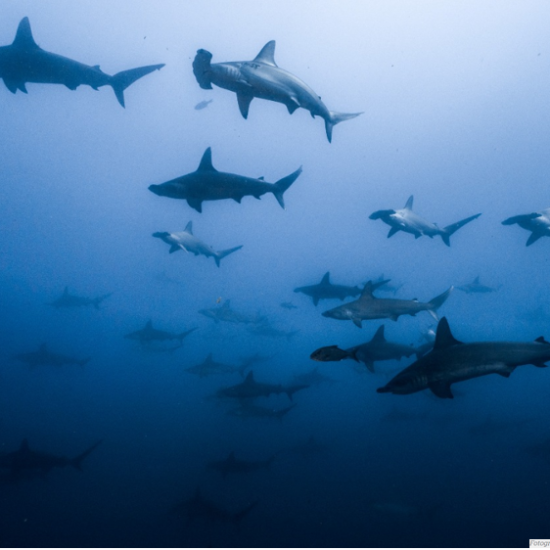
Almost two years ago, Costa Rica’s Hall of Appeals of the Supreme Court of Justice ruled (June 21, 2023) that hammerhead sharks are wildlife, and that their declaration as commercial species in July 2017 (AJDIP/290-2017), and which has since enabled its controversial commercial exploitation, was an unlawful act of absolute nullity. Furthermore, the court not only mandated enforcement of the Wildlife Conservation Law (Law 7317) to protect hammerhead sharks, but also ordered a complete halt to its fishing, including incidental catch. Unfortunately, the authorities have so far refused to comply with this court order.
Sadly, this is not surprising. Costa Rica has a long track record of failing to protect hammerhead sharks. For instance, even though the export of hammerhead products was officially banned in September 2014, the government authorized the export of nearly a ton of hammerhead fins in February 2015 under the guise of “public interest.” Then, on March 1, 2015, officials publicly announced a ban on the export of hammerhead products, yet still allowed landings and sales of their fins in national ports—totaling 41 tons by 2021 (the fins of about 60,000 sharks). When questioned about the final destination of this stockpile, the responsible authority claimed ignorance, stating only that it couldn’t be exported due to impossibility of issuing export permits. So then what? Were 41 tons of hammerhead shark fins consumed in Costa Rica, or are they sitting in a warehouse somewhere? Authorities should know, because the only other option is that the fins were exported illegally.At one point it appeared Costa Rica had definitively banned the capture and sale of hammerhead sharks in February 2023 (Decree 43900 MAG-MINAE). Yet paradoxically, that law still permits incidental catch—an exception the Court has clearly stated undermines its spirit. And in 2024, Costa Rica re-exported 12.6 tons of hammerhead fins to Hong Kong, allegedly originating in Nicaragua, although official records show Nicaragua only sent 1.6 tons through Costa Rica. Where did the remaining 11 tons come from? They didn’t come from Nicaragua!
What hammerhead sharks need to improve their conservation status in Costa Rica is simple: compliance with the Wildlife Conservation Law. What’s required is an environment minister who fulfills his legal duties and fully exercises the Ministry’s governing body status over threatened marine species, as the Court has ordered. Enough with environment ministers submitted to the fishing industry!
Hammerhead sharks are emblematic species, essential for strengthening the resilience of our oceans in the face of climate change and ensuring the continuity of the marine ecosystem services we all depend on. How can we stop the overfishing and extinction of marine species if authorities refuse to recognize that the hammerhead shark is legally wildlife and critically endangered? How can we convince the world that Costa Rica has the credibility to lead global marine conservation efforts if it won’t even obey its own Supreme Court’s order to protect hammerhead sharks—just to benefit the shark fin export industry?
Quite simply, you cannot do marine conservation—nor claim to be a global leader in it—without protecting hammerhead sharks at home.
Randall Michael Arauz Vargas
ID: 9-0078-0475
International Marine Conservation Policy Director
Marine Watch International
(+506) 8708 8253
rarauz@marinewatch.org